



What Is Functional Neurological Symptom Disorder (FNSD)? Understanding the Diagnosis
Receiving a diagnosis of Functional Neurological Symptom Disorder may leave you wondering what it means for your health and your future. Perhaps you have experienced weakness, shaking, changes in sensation, or episodes that resemble seizures. You may be asking: How can my symptoms be so disruptive when medical tests do not explain them?
The most important starting point is this: FNSD symptoms are real and involuntary. They are not imagined, intentionally produced, or evidence that someone is pretending to be ill. Research distinguishes functional neurological symptoms from the deliberate production of symptoms, despite misconceptions that continue to surround the diagnosis (Edwards et al., 2023). Nature
What Does FNSD Mean?
Functional Neurological Symptom Disorder (FNSD) is commonly referred to as Functional Neurological Disorder (FND). You may also encounter the term conversion disorder in medical records. These terms are used in discussions of neurological symptoms that affect movement, sensation, or other aspects of functioning (Mayo Clinic Staff, 2022a). Mayo Clinic
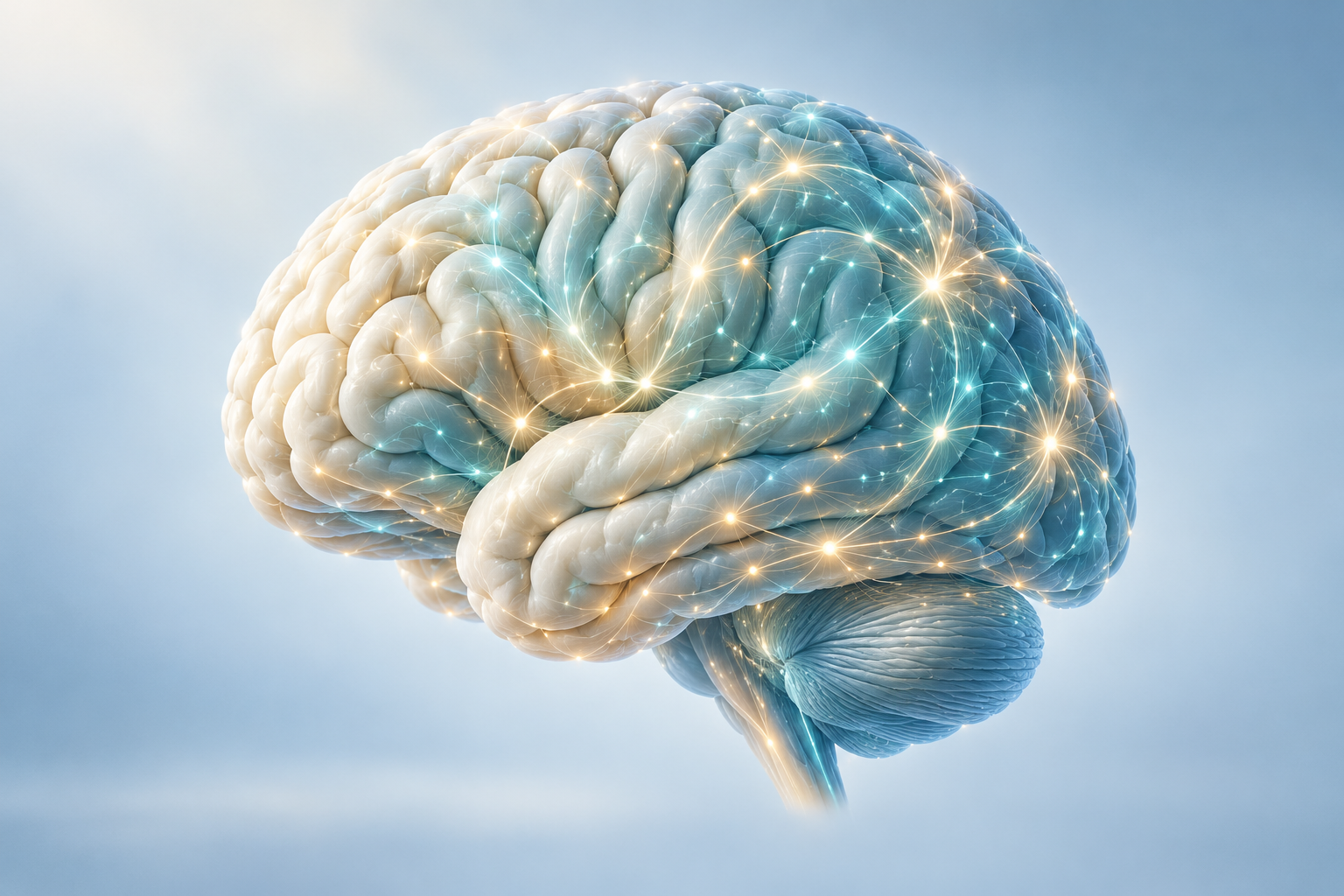
The word functional refers to how the nervous system operates. FND involves alterations in the functioning of brain networks, rather than a structural injury that explains the symptoms. Consequently, routine imaging may not reveal an explanation for a person’s difficulties. This does not mean that the symptoms are unimportant or that the nervous system is functioning normally in every respect (National Institute of Neurological Disorders and Stroke [NINDS], n.d.). NINDS
A problem with how the nervous system functions can produce genuine physical symptoms, even when routine scans do not identify a structural cause (NINDS, n.d.). NINDS
What Are the Common Symptoms?
FNSD can affect people differently. Symptoms may occur intermittently, fluctuate in intensity, or persist over time. Common presentations include the following (Mayo Clinic Staff, 2022b): Mayo Clinic
- Movement difficulties: Weakness, paralysis, tremors, difficulty walking, or problems with balance.
- Sensory changes: Numbness, reduced sensation, or difficulties involving vision or hearing.
- Speech and swallowing difficulties: Difficulty speaking, slurred speech, or problems swallowing.
- Functional seizures: Involuntary episodes that may involve shaking, reduced responsiveness, or changes in awareness.
People may also experience pain, fatigue, sleep difficulties, and problems with memory or concentration. These concerns deserve individualized assessment rather than an assumption that every symptom has the same explanation (Mayo Clinic Staff, 2022b; Park, 2026). Mayo Clinic
A symptom list cannot establish a diagnosis. Symptoms that resemble FNSD may also occur in other medical conditions, making appropriate clinical evaluation essential (Mayo Clinic Staff, 2022b). Mayo Clinic
How Can Brain Functioning Affect Movement and Sensation?
Movement and sensation depend on coordinated activity across brain systems. Researchers studying FND are examining how networks involved in movement, attention, bodily perception, and the experience of control interact. Changes in these interactions may help explain why a movement or sensation feels outside a person’s voluntary control (Hallett et al., 2022). PubMed Central (PMC)
For example, someone may struggle to move a limb intentionally but demonstrate more normal movement during an automatic action. A clinician can sometimes identify these differences during an examination. Such findings provide information about nervous-system functioning; they do not demonstrate that the person is deliberately causing the difficulty (Hallett et al., 2022). PubMed Central (PMC)
These scientific explanations are still developing. The exact causes of FND are not fully understood, and research continues to investigate its underlying mechanisms and potential diagnostic markers (NINDS, n.d.). NINDS
How Is FNSD Diagnosed?
FNSD should be diagnosed through a clinical assessment that identifies positive clinical signs—recognizable examination findings that support the diagnosis. It should not simply be the label given when other tests are normal. Modern diagnostic approaches emphasize identifying evidence for FND rather than treating it solely as a diagnosis of exclusion (Aybek & Perez, 2022). BMJ
Normal MRI results alone are not enough to diagnose FNSD. The evaluation should consider the person’s history, symptom patterns, and relevant examination findings, with additional testing when appropriate (Aybek & Perez, 2022; Mayo Clinic Staff, 2022a). BMJ
When symptoms include seizure-like episodes, clinicians may use video-electroencephalography, or video-EEG, to help clarify the diagnosis. Functional seizures and epilepsy can coexist, so identifying one does not automatically rule out the other (Tolchin et al., 2026). pubmed.ncbi.nlm.nih.gov
Consider asking your clinician: What findings support my diagnosis? Could another condition also be contributing? Which treatments fit my symptoms? You deserve an explanation that makes sense to you—not simply a diagnostic label.
Why FNSD Is Not “All in Your Head”
The phrase “all in your head” can imply that symptoms are imaginary or under conscious control. That is not an accurate description of FNSD. Functional symptoms can cause substantial disability and affect quality of life. The distinction between FND and intentional symptom production is clinically important, particularly because patients may encounter skepticism about their experiences (Edwards et al., 2023). Nature
A more helpful approach begins with taking the person’s experience seriously. For functional seizures specifically, current clinical guidance emphasizes respectful communication, avoiding stigmatizing behavior, explaining the diagnosis, and involving patients in treatment decisions (Tolchin et al., 2026). pubmed.ncbi.nlm.nih.gov
You should not have to defend the legitimacy of your suffering before receiving compassionate care.
Does FNSD Always Come From Stress or Trauma?
No. A history of trauma or an identifiable psychological stressor is not required for FNSD. Stress and adverse experiences may be relevant for some people, but they are not universal explanations. Physical injuries or other neurological illnesses may also precede functional symptoms. An individualized assessment is therefore more appropriate than assuming that every person’s symptoms have the same psychological cause (Hallett et al., 2022). PubMed Central (PMC)
Symptoms can develop after emotional or physical stress, but an identifiable trigger is not always present. The absence of a clear stressful event does not make the symptoms less genuine (Mayo Clinic Staff, 2022b). Mayo Clinic
Rather than asking, “What hidden trauma must explain this?” a more useful starting point is: “What factors matter in your situation, and what support would help you?”
What Does Treatment Involve?
Treatment should reflect the symptoms and difficulties affecting your life. Depending on your needs, care may involve neurology, psychotherapy, physical therapy, occupational therapy, or speech-language therapy. Physical and occupational therapy may address movement and everyday functioning, while speech-language therapy may help with speech or swallowing difficulties (Mayo Clinic Staff, 2022a). Mayo Clinic
Psychotherapy can address symptom management, coping with stressful situations, and accompanying anxiety or depression. Cognitive behavioral therapy, commonly called CBT, is one approach used in FND care. Trauma-related treatment may be appropriate when it is relevant to the individual’s history and treatment goals (Mayo Clinic Staff, 2022a). Mayo Clinic
For functional seizures, the American Academy of Neurology’s 2026 guideline concluded that psychological interventions may be effective in reducing seizure frequency, improving quality of life and psychosocial functioning, and reducing anxiety. This supports discussing psychological treatment without promising that a particular approach will work for everyone (Tolchin et al., 2026). pubmed.ncbi.nlm.nih.gov
Treatment evidence also differs across FND presentations. An approach that helps functional seizures should not automatically be assumed to have the same effectiveness for functional movement symptoms or other presentations. Current reviews emphasize individualized care and acknowledge limitations in the available research (Park, 2026). PubMed Central (PMC)
Does a Psychotherapy Referral Mean My Symptoms Are Imaginary?
No. A referral for psychotherapy is not evidence that your symptoms are fabricated. Psychological treatment can be one component of care for a genuine neurological condition. The reason for a referral should be explained in relation to your symptoms, needs, and goals—not presented as a dismissal of your experience (Edwards et al., 2023; Tolchin et al., 2026). Nature
You are entitled to ask what the treatment involves, why it is being recommended, and how progress will be evaluated.
Is Improvement Possible?
Improvement is possible, but outcomes vary. Earlier recognition and access to appropriate treatment can support recovery, although not everyone responds to available interventions. Some people continue to experience symptoms and require ongoing support (Aybek & Perez, 2022; Park, 2026). BMJ
Treatment goals may include reducing symptoms, improving daily functioning, and increasing participation in meaningful activities. Current evidence supports realistic hope while also recognizing that treatment research has limitations and that no single approach guarantees recovery (Park, 2026). PubMed Central (PMC)
Your goals deserve to be part of the conversation. What would meaningful progress look like for you—returning to a valued activity, participating more comfortably in family life, or feeling more confident managing symptoms?
Finding Support at Powell Therapy
At Powell Therapy, the starting point is taking your experience seriously. You deserve space to discuss the impact of your symptoms, ask questions without judgment, and identify goals that matter to you.
To explore how psychotherapy might fit into your FNSD care, contact me to discuss your concerns and treatment goals. Psychotherapy is intended to support, not replace, appropriate neurological evaluation and medical care.
Your symptoms deserve attention. Your questions deserve answers. Your care should begin with understanding, not blame.
Dan Powell, MA., LMFT, BCBA
This article provides general educational information and is not a substitute for individualized medical assessment or treatment. Do not assume that new or suddenly different neurological symptoms are FNSD. Sudden facial drooping, one-sided weakness, or difficulty speaking may indicate a stroke. Call 911 immediately for these symptoms (Centers for Disease Control and Prevention, 2026). CDC
References
Aybek, S., & Perez, D. L. (2022). Diagnosis and management of functional neurological disorder. BMJ, 376, Article o64. https://doi.org/10.1136/bmj.o64
Centers for Disease Control and Prevention. (2026, May 19). Signs and symptoms of stroke. https://www.cdc.gov/stroke/signs-symptoms/index.html
Edwards, M. J., Yogarajah, M., & Stone, J. (2023). Why functional neurological disorder is not feigning or malingering. Nature Reviews Neurology, 19(4), 246–256. https://doi.org/10.1038/s41582-022-00765-z
Hallett, M., Aybek, S., Dworetzky, B. A., McWhirter, L., Staab, J. P., & Stone, J. (2022). Functional neurological disorder: New subtypes and shared mechanisms. The Lancet Neurology, 21(6), 537–550. https://doi.org/10.1016/S1474-4422(21)00422-1
Mayo Clinic Staff. (2022a, January 11). Functional neurologic disorder/conversion disorder: Diagnosis and treatment. Mayo Clinic. https://www.mayoclinic.org/diseases-conditions/conversion-disorder/diagnosis-treatment/drc-20355202
Mayo Clinic Staff. (2022b, January 11). Functional neurologic disorder/conversion disorder: Symptoms and causes. Mayo Clinic. https://www.mayoclinic.org/diseases-conditions/conversion-disorder/symptoms-causes/syc-20355197
National Institute of Neurological Disorders and Stroke. (n.d.). Functional neurologic disorder. https://www.ninds.nih.gov/health-information/disorders/functional-neurologic-disorder
Park, J. E. (2026). Treatment of functional neurological disorders. Journal of Clinical Neurology, 22(5), 514–528. https://doi.org/10.3988/jcn.2026.0223
Tolchin, B., Goldstein, L. H., Reuber, M., Stone, J., Perez, D. L., LaFrance, W. C., Jr., Fobian, A. D., Dorman, J., Hua, L. H., L’Erario, Z. P., Swanson, S. J., Gilli, P., Mildon, B., Takahashi, C., Botchway-Doe, K. A., Hamel, K. P., Silsbee, H. M., & Oskoui, M. (2026). Management of functional seizures practice guideline executive summary: Report of the AAN Guidelines Subcommittee. Neurology, 106(1), Article e214466. https://doi.org/10.1212/WNL.0000000000214466